


NITROFUSION2

Adversarial distillation from the text stream One- and two-step sampling

Bringing Adversarial Loss
to the Text Stream of
Multimodal Diffusion Transformers

Dar-Yen Chen, Yi-Zhe Song

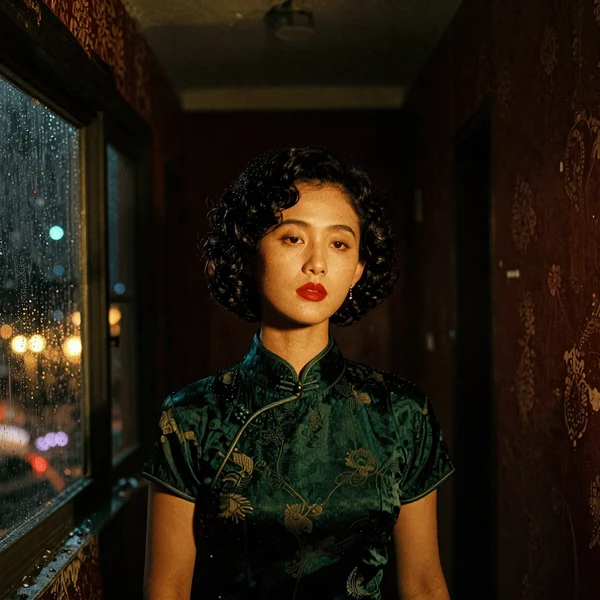
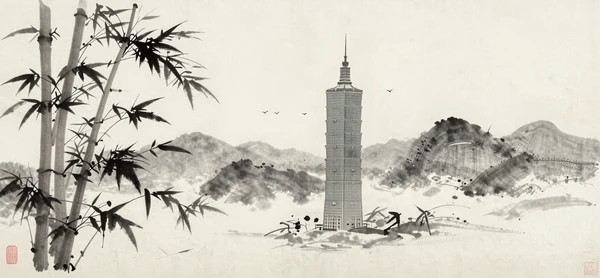
A woman in an embroidered green dress in a dim corridor beside a rain-streaked window. A tree frog holding a newspaper whose headline reads NitroFusion2 Leaps Ahead. A granite spire lit by dawn, mirrored in a still alpine lake. A lamplit miniature village inside a teacup, floating above cloud under the Milky Way. An ink painting of a tower rising past bamboo stems and distant mountains.

If this paper has one message, it is this: in an MMDiT, the text stream is no longer only conditioning. Once it reads the image, it becomes a discriminative representation, opening a new direction for adversarial diffusion distillation and allowing that discrimination to be steered toward specific aspects.

Architecture

Architecture of TSAD and ACDTraining pipeline. Noise, time and prompt enter the student generator, which produces a sample. The sample and a reference image pass through a frozen MMDiT discriminator whose blocks carry image tokens and text tokens. An image-stream head reads the image tokens. Text-stream heads read the text tokens, and Aspect-Cued Discrimination selects which head is used from the cue: object, typography, action, or the full caption, each giving a real-or-fake decision.

Swipe sideways to follow the pipeline.

The frozen MMDiT discriminator reads the student sample and the reference through both token streams.

In an MMDiT, text and image tokens move through the same attention layers, so by the middle of the network the text tokens have already read the image. They hold a compact summary of what was generated, organised by what the prompt asked for. NitroFusion2 puts an adversarial loss there, on that summary, alongside the conventional one on the image features. Because the summary stays tied to the text condition, changing the condition changes what it reports — so one frozen discriminator can be asked a different question simply by swapping the cue. A typography cue makes it attend to rendered text, an object cue to the things named, a style cue to how the image looks. One backbone, many critics, at no extra cost.

Abstract

Adversarial diffusion distillation has conventionally relied on image features for discrimination. We revisit this choice for multimodal diffusion transformers (MMDiTs), whose text stream becomes image-dependent through joint attention. We introduce Text-Stream Adversarial Distillation (TSAD), which exploits intermediate text-token states as a new adversarial representation. Because the text stream has already read the image while remaining tied to the text condition, changing that condition changes what information it extracts from the image. Building on this property, we introduce Aspect-Cued Discrimination (ACD), which conditions the discriminator on different aspects of the sample, such as typography, objects, or style, to steer which properties are emphasized during adversarial training. Building on the expert-discriminator design of NitroFusion, we integrate TSAD and ACD in NitroFusion2.

NitroFusion2 brings few-step distillation from the conventional 4–8-step regime down to just 1–2 steps at comparable quality. At one step, it produces sharp rendered text and rich fine-grained details, making one-step generation practical rather than merely a stress test for distillation. At two steps, it remains competitive across the evaluated benchmarks. These results establish the MMDiT text stream as a powerful and steerable representation for adversarial diffusion distillation.

Citation

@misc{chen2026nitrofusion2,  title        = {NitroFusion2: Bringing Adversarial Loss to the Text Stream of Multimodal Diffusion Transformers},  author       = {Chen, Dar-Yen and Song, Yi-Zhe},  year         = {2026},  howpublished = {\url{https://github.com/ChenDarYen/NitroFusion2}},  note         = {Paper coming soon}}